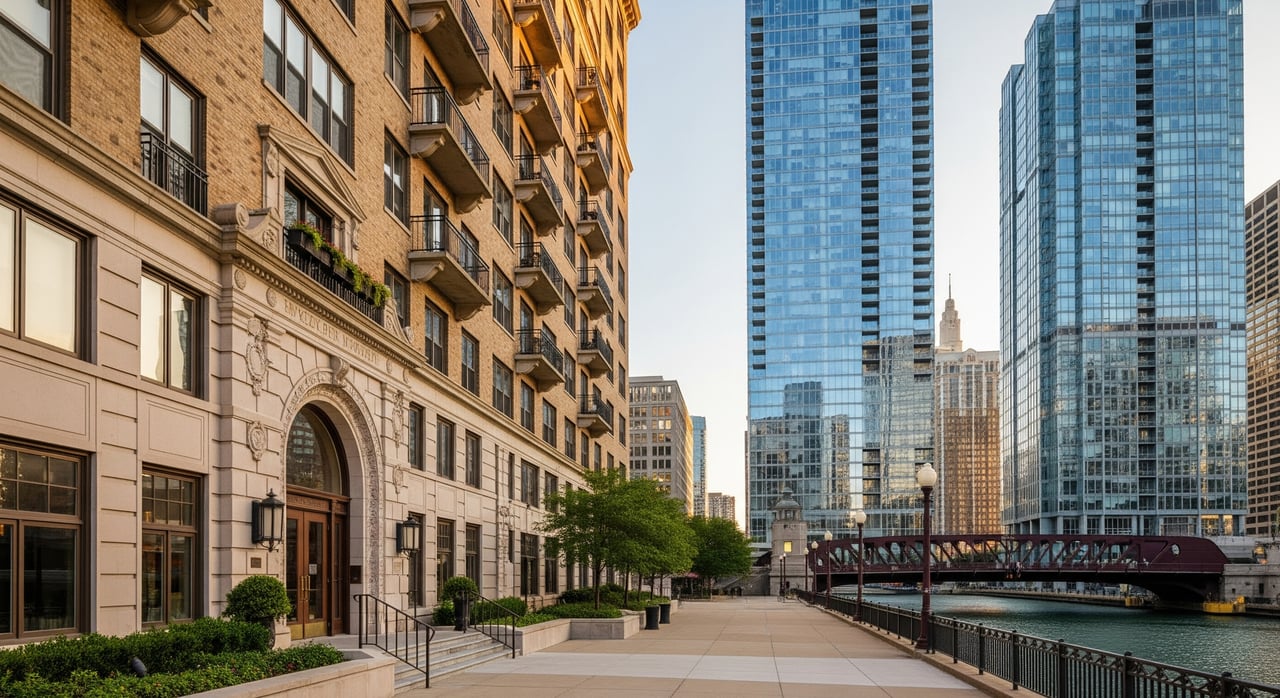
Trying to choose between a high-rise or mid-rise in River North? The right call comes down to how you want to live day to day, what you expect to pay in monthly assessments, and how each building’s finances and rules support your goals. River North offers both full-service towers and boutique mid-rises, each with real advantages. This guide breaks down lifestyle trade-offs, fees, resale signals, and a practical checklist so you can compare buildings with confidence. Let’s dive in.
What “high-rise” and “mid-rise” mean here
In Chicago real estate, you’ll typically see mid-rise used for buildings around 5 to 11 stories, and high-rise used for 12 stories or more. Low-rise is usually 1 to 4 stories. Codes can define high-rise by height rather than floors, so always confirm how a listing classifies the building.
River North has a wide mix. You’ll find luxury towers with full-service amenities, converted lofts in boutique mid-rises, and newer mid-rise condo developments. Location matters here, including proximity to CTA stations like Merchandise Mart, Chicago, and Grand, riverfront views, and the dense restaurant scene. Those factors affect noise, foot traffic, commute convenience, and demand for certain unit types.
Why building age matters in River North
River North’s inventory ranges from historic conversions to 1980s–2000s towers to modern luxury builds from the last two decades. Age influences window quality, elevator systems, and mechanicals. That can shape your risk for special assessments and the likelihood of near-term capital projects. Reviewing a building’s maintenance history and planned projects helps you anticipate future costs.
Costs, HOA fees, and assessments
Monthly assessments are about more than the lobby and landscaping. In most condo associations, fees help pay for common-area upkeep, building systems, some utilities, the master insurance policy, management or staffing, and reserves for future capital projects. The exact mix varies by building and should be outlined in the budget.
High-rises typically carry higher assessments because they run larger mechanical systems, maintain more elevators, and often include door staff or concierge services. Big amenity packages like expansive gyms and pools also increase operating costs. Mid-rises often have lower fees if amenities are lighter and systems are smaller. That said, a luxury mid-rise with premium amenities can have fees similar to a tower, and a minimal-amenity high-rise can be moderate. Compare the line items before you decide.
Special assessments and big-ticket projects
Special assessments commonly fund major work like roof or window replacement, façade or masonry repairs, elevator modernization, or boiler and chiller replacement. In Chicago, exterior envelope work and elevator projects are frequent cost drivers in towers, while older mid-rises may need tuckpointing or window upgrades. Ask for the history of special assessments, planned projects, and the reserve balance. Check city permit history for signs of recent or upcoming envelope, elevator, or mechanical work.
Watch for red flags like a low reserve balance relative to building needs, frequent large special assessments, deferred maintenance noted in inspections or permits, a high rental percentage that could affect financing, and unclear insurance coverage details on the master policy.
Rules, governance, and due diligence
Illinois condominiums operate under the Illinois Condominium Property Act, while each association’s declaration, bylaws, and rules define use restrictions, pet policies, and rental policies. Before you write an offer, request key documents such as the current budget and budget-to-actuals, reserve study or engineer’s report, meeting minutes for the last 12 to 24 months, the list of special assessments and planned projects, insurance master policy declarations, and full governing documents. If available, review management and vendor contracts, including the elevator maintenance agreement. These materials help you evaluate both costs and operational health.
Lifestyle trade-offs in River North
Amenities and services
High-rises in River North often provide full-service lobbies, door staff, multiple elevators, larger fitness centers, pools, business spaces, valet or covered parking, and on-site management. Convenience is a major draw, but it is reflected in assessments. Mid-rises usually offer simpler amenities, such as a small gym, rooftop deck, or courtyard, and sometimes self-management. If you want a social, convenience-forward lifestyle, a tower may fit. If you prefer a quieter, boutique environment with potentially lower ongoing costs, a mid-rise can be a better match.
Views and exposure
Upper floors in high-rises tend to offer broader skyline, river, or even lake views, which often carry premiums. Mid-rises can still deliver excellent light and views, especially on corners and river-facing sites, but shorter sightlines and nearby towers can impact exposure. If view protection matters to you, confirm current sightlines at the unit and research adjacent lots for planned development using city permit and zoning records.
Noise, privacy, and urban activity
On busy streets lined with restaurants and nightlife, lower floors can experience more street-level noise. Higher floors in towers usually reduce it. In larger buildings, amenity spaces and mechanical penthouses can add sound, so check the location of those rooms relative to the unit. Boutique mid-rises on side streets may feel more residential with lower foot traffic. Visit at different times to gauge your noise tolerance.
Elevators and day-to-day logistics
Towers depend on elevators for daily living. Ask about the number of elevators, the elevator-to-unit ratio, peak wait times, the presence of a service elevator, the age and modernization history, and contingency steps when an elevator is out of service. Mid-rises might have fewer elevators or rely more on stairs in lower buildings, which can reduce maintenance exposure but affect convenience, especially for moves or deliveries.
Pets and building rules
Pet policies are set by each association. They may include size or weight limits, breed restrictions, limits on the number of pets, registration, and deposits or fines. Some high-rises feature on-site pet amenities like wash stations or dog runs, yet still enforce strict rules. Mid-rise buildings can be either strict or flexible depending on owner preferences. Check whether pet rules are in the declaration, which can be harder to change, or in the rules, which are easier to amend.
Deliveries, packages, and trash
High-rises usually have organized package rooms, standardized delivery protocols, and trash chutes or centralized waste rooms. This improves convenience but adds operating complexity. Mid-rises sometimes have simpler or less formal package handling. If you receive frequent deliveries, ask how packages are managed and whether any fees apply for storage or valet services.
Resale and financing signals in River North
What supports resale value here? Upper floors and strong exposures, well-maintained and modern amenity packages, healthy reserves with limited recent special assessments, and a great location near CTA stops, the Riverwalk, and strong retail corridors. Unit layout and ceiling height also matter. Loft conversions with tall ceilings or open plans often appeal to buyers looking for character.
Buyer demand in River North spans many profiles. That mix can influence rental policies and resale liquidity. A higher percentage of rentals may attract investors, but some owner-occupants prefer buildings with more owners. Lenders also look at project health, including owner-occupancy percentages, litigation status, and reserve adequacy. Those factors can affect underwriting and available loan options. Appraisals rely on comparable sales, so unique floor plans or one-of-a-kind units may require extra attention when pricing.
Across the neighborhood, newer amenity-driven towers have pushed older buildings to refresh common areas and services. Special-assessment risk typically rises with age as envelopes and elevators reach replacement cycles, and some loft conversions eventually need upgrades to plumbing or electrical systems. Many buyers now prioritize flexible work space, balconies or terraces, and modern HVAC features.
Liquidity varies by building. Recognized towers with comprehensive amenities often draw steady demand and can sell faster. Boutique mid-rises can be more niche. Unique units may command premiums, while others can take longer to find the right buyer. Your exit strategy should reflect the building’s track record and buyer pool.
How to tour and compare buildings
Use this checklist to get clear answers and apples-to-apples comparisons.
Documents to request before or during an offer
- Current HOA budget and most recent budget-to-actuals
- Reserve study or engineer’s report and current reserve balance
- Meeting minutes for the last 12 to 24 months and annual meeting notices
- History of special assessments and a list of planned capital projects
- Insurance master policy declarations and deductibles
- Declaration, bylaws, rules, rental policy, and pet policy language
- Management and vendor contracts, including elevator maintenance
- Owner-occupancy and rental percentages
On-site unit and building checks
- Elevator count, age, service records, and presence of a service elevator
- HVAC type and dates of major replacements for building systems
- Window and balcony condition, including sealant and glazing
- Any signs of water intrusion or prior leaks in hallways and units
- Package handling, storage limits, and any related fees
- Location of mechanical rooms and rooftop equipment relative to the unit
Questions for the association or manager
- What special assessments have occurred recently, and what is planned in the next 1 to 5 years?
- What is the reserve balance, and when was the last reserve study performed?
- What percentage of units are owner-occupied versus rented?
- What are the current pet restrictions, and are any rule changes under consideration?
- What is the policy on short-term rentals and how is it enforced?
- What does the master insurance policy cover, and what are owner deductibles?
Questions to ask while touring
- What are elevator wait times during peak hours?
- How is parking assigned, and are there waitlists for spots or EV charging?
- How is guest parking handled?
- Do amenities require reservations or user fees?
- Who handles snow removal and landscaping, and how are costs controlled?
Personal lifestyle checklist
- Visit during evening and weekend daytime to gauge nightlife and delivery noise
- Map your walk to CTA, grocery stores, and other daily needs
- Confirm outdoor space options, such as your balcony, rooftop, or the Riverwalk
- Consider accessibility needs, including elevator reliability and stair access
Which building type fits you best?
If you want full-service convenience, strong amenity access, and the potential for high-floor views, a high-rise will likely suit you. If you prefer a quieter, boutique feel with a simpler amenity set and potentially lower ongoing costs, a mid-rise is compelling. Your decision should include the association’s financial health, the age and condition of key systems like elevators and windows, and how rules around pets, rentals, and amenities align with your lifestyle.
In River North, both options can be excellent. The best fit is the building that makes your daily routine easy and your long-term ownership predictable. A careful read of budgets, reserves, meeting minutes, and planned projects can help you avoid surprises and buy with confidence.
As a family-owned brokerage with active property management experience, we look at buildings through an operational lens. That means helping you spot cost drivers, compare amenity value, and understand how rules and reserves can affect your experience over time. When you are ready to tour a curated list of River North high-rises and mid-rises, reach out to TGI Realty for a focused consultation.
FAQs
What is the difference between a high-rise and a mid-rise in River North?
- High-rises are typically 12 stories or more, while mid-rises are about 5 to 11 stories; confirm the classification in the listing or building plans.
How do HOA fees usually compare between high-rises and mid-rises?
- High-rises often have higher assessments due to larger systems, more elevators, and staffed services, while mid-rises can be lower if amenities are simpler, though there are exceptions.
What documents should I review before buying a River North condo?
- Review the budget, reserve study, minutes, special assessment history, master insurance, governing documents, rental and pet policies, and management or vendor contracts.
Are upper floors in high-rises always quieter?
- Higher floors can reduce street noise, but amenity spaces or rooftop mechanical equipment can add sound, so check their locations relative to the unit.
How do rental percentages affect financing and resale?
- Higher rental percentages can limit some loan options and may influence buyer demand, so ask for the owner-occupancy data and discuss lender requirements early.
What should pet owners check before choosing a building?
- Confirm allowed species, size or weight limits, breed restrictions, number of pets, registration, and whether rules are in the declaration or in easily amended house rules.